
Quartz Stone Small Slabs
Quartz stone small slabs have strong global competitiveness. This is primarily thanks to their high cost performance, extensive application scenarios and stable supply chains. The industry follows a clear pattern. Mature core markets lead steadily. By contrast, emerging regions see rapid demand growth. Additionally, rising global demand and expanding production help expand market share. Accelerated urbanization and booming old house renovation further unlock their long-term potential worldwide.
Quartz stone is a mainstream material for quartz stone countertops. It is used globally in construction and home furnishing. It is widely applied for countertops, feature walls and window sills. This is due to its superior wear resistance, stain resistance and eco-friendliness. Among quartz products, small slabs stand out. Moreover, they are cost-effective and favored by global purchasers for their practicality and adaptability.
2026 industry data shows the global quartz stone market hit $20.13 billion in 2025. It will likely reach $22.97 billion in 2026. For instance, quartz stone small slabs are a high-cost-performance segmented product. They enjoy strong global purchasing demand. They also show clear growth momentum in both mature and emerging markets.
Core Specifications, Product Lines & Global Distribution
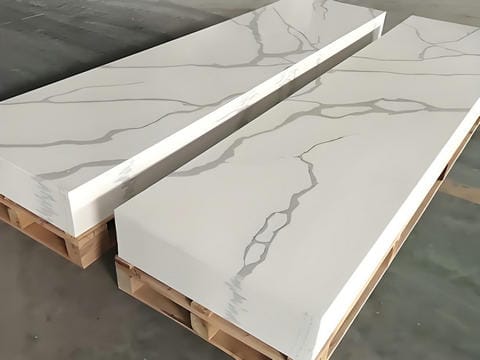
Small slabs, including half slabs, dominate the global mid-to-low-end market. They benefit from flexible size matching and low transportation loss. Their mainstream sizes are 3050×750mm and 2440×750mm. Optional thicknesses are 12mm, 15mm and 20mm. Furthermore, their product system covers three series: basic home decoration, mid-end minimalist and high-end texture.
In terms of global market layout, the Asia-Pacific region accounts for 44%. North America accounts for 27% and Europe 21%. Meanwhile, quartz stone small slabs are gradually penetrating emerging markets. These include Southeast Asia, the Middle East and Africa.
Cost Performance: Core Competitive Edge of Quartz Stone Small Slabs
Cost performance drives the global popularity of small slabs. These slabs have strong adaptability. They meet the needs of quartz stone countertops in different regions and budgets. Thus, they become the preferred rigid-demand material for global residential and engineering projects. Compared with large-size quartz slabs, they have more prominent price advantages and higher market penetration.
Mid-Range Quartz Stone Small Slabs: Global Mainstream Products
Mid-range small slabs and half slabs use 90% high-purity quartz sand. Their regular sizes are 3050×750mm and 2440×750mm. Common thicknesses are 12mm and 15mm. They belong to the mid-end minimalist series, accounting for over 60% of global sales. Importantly, they cover mainstream consumers in key global markets.
In application, 12mm quartz stone small slabs work for wall cladding and window sills. 15mm ones suit kitchen and bathroom countertops. They also perform well in old house renovation. For example, in North America, quartz surpassed granite in 2023. It accounted for 61% of high-end countertop installations. Thus, quartz stone small slabs become the first choice for home decoration. This is due to their flexible size.
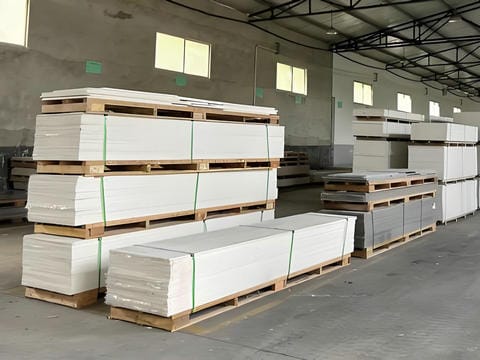
Their compact size reduces transportation costs and damage rates. This enhances export competitiveness. It is especially beneficial in emerging markets like Southeast Asia and Brazil. Additionally, Xiamen stone enterprises are key global suppliers of quartz stone small slabs. They export to 118 countries and regions. This ensures stable bulk supply. Driven by Asia-Pacific urbanization, mid-range quartz stone small slabs achieve a 14.13% annual growth rate. This rate is far above the global average.
High-End Quartz Stone Small Slabs: Quality Choice for Budget-Limited Quartz Stone Countertops
High-end small slabs and half slabs use premium raw materials. Their core thicknesses are 15mm and 20mm. Standard sizes are 3050×750mm and 2440×750mm. They belong to the high-end texture series, accounting for 25% of global sales. In particular, North America contributes 45% of high-end consumption.
These high-end slabs are used in high-end residences and small commercial projects. 15mm slabs are for high-end walls. 20mm slabs are for load-bearing commercial countertops. They have strong demand in Germany, the UK, the US and Canada. This is because they meet the quality requirements of high-end spaces.
Small slabs have a Mohs hardness of 7. Their heat resistance is above 150℃. Stain resistance exceeds 95%. Their performance is close to large quartz slabs. They also support custom special-shaped processing for quartz stone countertops. Besides, their high-end colors fit European minimalist and North American high-end styles, such as texture gray.
In North American construction projects, 73% of builders specify quartz materials. Over 30% choose quartz stone small slabs. They use them for flexible construction of quartz stone countertops. This, in turn, shows their strong adaptability in high-end project applications.
Global Demand & Supply of Quartz Stone Small Slabs
Global Market Demand Distribution
The Asia-Pacific region is the largest and fastest-growing market for small slabs and half slabs. It holds a 44% global share in 2025. Specifically, China and India’s urban construction drives this growth, creating huge demand for these products.
The global old house renovation market provides broad space. Potential demand exceeds 60 million square meters. Quartz stone small slabs and half slabs are optimal here. This is because of their low cutting loss and controllable costs. They are a popular choice for renovation projects.
North America has over 20 million houses in renovation. Quartz accounts for 35% of kitchen countertop demand there. Similarly, global quartz cabinet countertop demand exceeded 100 million square meters in 2025. Quartz stone small slabs and half slabs hold an important share in this market.
Consumer Preferences & Emerging Market Potential
Global consumers have differentiated preferences for quartz stone countertops. European and American buyers focus on texture and quality. Asia-Pacific and Southeast Asian ones prioritize cost performance. These differences drive product upgrading for small slabs, ensuring continuous evolution.
Quartz stone small slabs are widely used in furniture manufacturing. They are used across 118 countries. This enriches application scenarios for quartz stone countertops. For example, in emerging markets like Indonesia, basic 12mm/2440×750mm quartz stone small slabs are in the initial stage. They have huge growth potential.
Global Supply Capacity & Support
China is the core production base of small slabs and half slabs. For instance, Xiamen enterprises lead global exports. Shandong Shuiguo Town has 16 manufacturers and 96 production lines. Additionally, international brands like Cosentino Group cover the high-end segment.
Global annual supply of quartz stone small slabs and half slabs exceeds 8 million square meters. This stabilizes prices. It also offsets raw material fluctuations. Meanwhile, tariff increases in Europe, North America and Southeast Asia drive local production. China’s optimized supply chain reduces costs.
Recycled quartz stone small slabs and half slabs hold a 30% market share. They meet environmental trends. They also offer cost advantages. Consequently, manufacturers actively promote these products. This helps improve their competitiveness.
Competitive Advantages & Future Outlook for Quartz Stone Countertops
Quartz stone small slabs have clear advantages over natural stone. They have 58% higher stain resistance and cost 50% less. They have no radiation. Their service life is 60% longer. Maintenance costs are 50% lower. Thus, 72% of global buyers favor them over natural stone.
Compared with ordinary artificial stone, quartz stone small slabs perform better. Their scratch resistance exceeds 80%. Water absorption is below 0.02%. This makes them suitable for high-frequency use. Furthermore, over 52% of global modern kitchen renovations use quartz materials. These small slabs are gaining more market share.
The industry’s compound annual growth rate is expected to exceed 4.97% by 2035. For example, future optimization will include new specifications. These are 10mm ultra-thin and 25mm thickened slabs. They will also include antibacterial and super stain-resistant models. These models are suitable for quartz stone countertops.
Recycled products will increase market share. This aligns with global environmental trends. Additionally, quartz stone small slabs and half slabs will expand into emerging markets. They will also enhance high-end penetration in Europe and America. This applies to quartz stone countertops.
By 2035, the projected market size of these slabs will reach $17.196 billion. This will make them the core of the global mid-to-low-end quartz stone countertops market. Ultimately, they will continue to drive industry growth. They will do so with their cost performance and adaptability.