
Quartz stone texture
Quartz stone texture is key to quartz slabs, combining aesthetic value and practicality, with its quality ensured by advanced equipment and ratio. Boasting diverse types, outstanding advantages and wide application scenarios, it is the core choice for decoration. Caesarstone and Silestone are high-quality representatives promoting industry development—Caesarstone excels in natural authenticity, while Silestone leads in functional innovation.
Polished, matte, grainy or veined—each fits specific needs and aesthetic preferences, its durability and eco-friendliness making it favored by owners, purchasers and importers. Caesarstone and Silestone have global recognition for their consistent quality and unique concepts: Caesarstone caters to natural, understated luxury, while Silestone appeals to modern users.
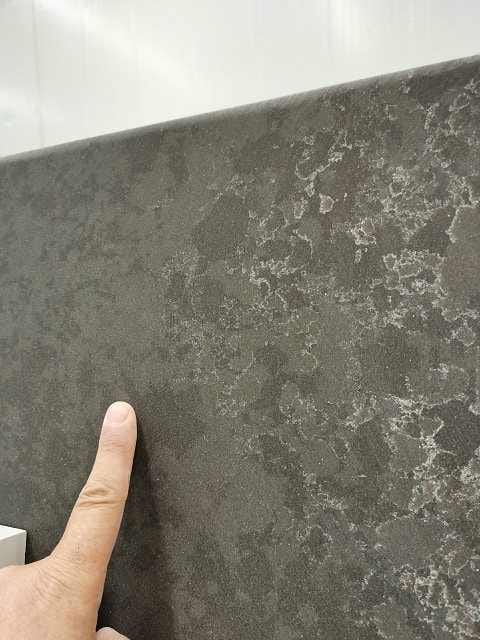
Future tech advances will diversify textures and make them more high-quality, bringing more decoration choices. Choosing the right texture—whether from Caesarstone, Silestone or other brands—means a beautiful, durable plan that helps create an ideal space. Global buyers and designers need to understand their features to meet project needs and create spaces that stand the test of time.
I. What is Quartz Stone Texture? Core Definition & Forming Principles
Quartz stone texture refers to surface look and feel, formed by raw materials and processing. Unlike natural stone textures, which are random and uneven, quartz texture is more uniform and controllable. Brands like Caesarstone and Silestone follow strict standards, using premium materials and advanced equipment to create appealing, durable textures, each with a unique production philosophy.
Two factors ensure high-quality quartz texture: advanced equipment and scientific ratio, which work together for beautiful, durable surfaces. Advanced pressing ensures even material distribution, while scientific ratio determines density and quality. Both brands use vacuum die-casting and vibration—Caesarstone adjusts quartz particle ratio for naturalness, Silestone optimizes resin for better functionality—resulting in dense, non-porous and wear-resistant textures.
Quartz stone has 95%-97% high-purity quartz crystals and 3%-5% food-grade resin, a ratio that ensures dense, non-porous texture resistant to fading and deformation. Manufacturers add trace environmental pigments to enrich color and layering: Silestone uses unique pigment formulas for vibrancy, while Caesarstone uses mineral-based pigments to create an authentic stone feel that mimics granite and marble.
Advanced vibration and pressure equipment is key, using high-frequency vibration and pressure to bond quartz particles seamlessly into a smooth, uniform texture. Avoiding the unevenness and pores of ordinary textures, it lays a foundation for durability. Both brands invest in equipment upgrades—Caesarstone’s preserves natural particle details, while Silestone’s mixes antibacterial materials to infuse functionality into texture.
II. Common Types of Quartz Stone Texture: Adapt to Diverse Decoration Styles
Diverse Types of Quartz Stone Textures and Brand Coverage
Processing technology advances make textures more diverse, with each type boasting unique characteristics that fit different home and commercial styles. Common types include polished, matte, grainy and veined, all covered by Caesarstone and Silestone—each with unique interpretations and innovations aligned with their brand positioning.
Polished Texture: Popular Shiny Style
Polished texture is the most popular type, featuring a smooth, shiny surface that reflects light to brighten spaces. Manufacturers use advanced polishing equipment to make its surface as smooth as a mirror, suiting modern minimalist and light luxury styles as well as high-end commercial spaces like hotel lobbies and mall counters. Caesarstone’s polished texture has high gloss, resisting scratches with a natural sheen, while Silestone’s is refined and crystal-clear, pairing with bold colors for modern spaces.
Matte Texture: Soft and Anti-Glare Style
Matte texture has a low-gloss surface that feels soft and delicate to the touch, avoiding polished texture’s glare to create a warm, comfortable atmosphere. Hiding fingerprints and scratches well, it is ideal for kitchen countertops, bathroom vanities and living rooms, suiting Nordic and rustic styles. Silestone’s matte texture has anti-fingerprint features, stain-resistant and perfect for busy kitchens, while Caesarstone’s emphasizes natural mineral grains for a subtle, earthy look.
Grainy Texture: Natural Granite-Like Style
Grainy texture has fine, evenly distributed quartz particles, simulating granite’s natural texture with strong hierarchy and three-dimensionality. Manufacturers adjust particle size as needed to adapt to different aesthetic preferences, suiting American, Mediterranean and industrial styles. Caesarstone’s grainy texture uses varied particle sizes for an authentic granite appearance, while Silestone’s offers more color options with a smoother finish for easy cleaning.
Veined Texture: Marble-Imitating Durable Style
Veined texture imitates marble’s natural veining, with smooth, natural lines created by adding special pigments. With diverse patterns—straight, curved and cloud lines—it combines marble’s beauty with quartz’s durability, suiting high-end home and commercial spaces. Caesarstone’s veined texture replicates rare marble patterns like Calacatta and Carrara, its veining soft and natural, while Silestone’s has modern, abstract lines with bold color contrasts for contemporary spaces.
Unique Features of Caesarstone and Silestone
Caesarstone and Silestone have unique features: founded in 1987 in Israel, Caesarstone focuses on natural, understated textures that blend seamlessly with various spaces, using natural mineral pigments for warm tones. Its Classico series has subtle grainy textures complementing traditional and modern homes. Under Spain’s Cosentino Group, Silestone emphasizes innovation, offering textures with antibacterial properties and iconic colors like “Black Crystal” and “Snow Mountain”—these brands are synonymous with high-quality quartz texture.
III. Core Advantages of Quartz Stone Texture: Why It’s Favored by Global Buyers
Quartz stone texture stands out in the decoration market, its advantages linked to advanced equipment and ratio, outperforming traditional stone textures with edges in durability, eco-friendliness and cost-effectiveness. Caesarstone and Silestone enhance these advantages, setting higher industry standards with brand-specific upgrades.
Extreme Durability
First, it is extremely durable: advanced pressing and ratio make it dense, non-porous with Mohs hardness 6-7, resisting scratches from knives and keys and rarely cracking, peeling or yellowing. With a 15-20 year service life, it reduces maintenance costs. Both brands meet strict durability standards—Caesarstone’s texture resists thermal shock, ideal for kitchen countertops, while Silestone’s has embedded antibacterial properties to prevent bacterial growth.
Environmental Friendliness and Health
Second, it is environmentally friendly and healthy: manufacturers use high-purity quartz sand and food-grade resin, making it non-radioactive and free of harmful emissions with VOC levels far below EU E1 and US CARB P2. Allowing direct food contact, it suits kitchen countertops and dining tables. Both brands prioritize eco-friendliness—Caesarstone uses recyclable packaging and eco-friendly production processes, while Silestone’s texture uses low-VOC resin and recyclable quartz particles.
High Cost-Effectiveness
Third, it offers high cost-effectiveness: cheaper than natural stone textures (50%-70% of marble or granite) but with better performance, it needs no frequent sealing or maintenance, resulting in much lower long-term costs. China’s industrial chain controls production costs to enhance global competitiveness. Though Caesarstone and Silestone are high-end brands, their textures’ long service lives and low maintenance needs make them cost-effective long-term.
Easy Cleaning and Maintenance
Finally, it is easy to clean and maintain: its dense structure prevents stains and water, with daily cleaning requiring only a damp cloth and neutral detergent to save time and effort. Unlike natural stone, it needs no waxing or regular sealing, reducing maintenance trouble. Silestone’s texture is known for stain resistance, with tough stains wiping away easily, while Caesarstone’s is easy to clean and maintains its appearance for years.
IV. Application Scenarios of Quartz Stone Texture: Perfect for Home & Commercial Decoration
Applications of Quartz Stone Texture in Home Decoration
In home decoration, it has many uses—kitchen countertops, bathroom vanities, living room floors, background walls and dining tables. Polished texture suits kitchen countertops, beautiful and resistant to oil and stains, while matte texture suits bathroom vanities, avoiding glare to create comfort. Caesarstone’s texture is used in high-end kitchens, its veined and grainy textures complementing luxury designs, while Silestone’s is popular for family homes with vibrant colors and antibacterial properties.
Quartz Stone Texture for Home Decoration Details
Grainy texture works well for living room floors, adding a natural, rustic feel, while veined texture suits TV background walls and dining tables, becoming the space’s visual focus to enhance overall decoration grade. Fitting various home styles—modern minimalist and traditional classic—Caesarstone’s veined texture is a luxury home favorite, mimicking rare marble without high maintenance, while Silestone’s colorful textures liven modern homes, its bright hues perfect for accent walls.
Applications of Quartz Stone Texture in Commercial Decoration
In commercial decoration, it has wide uses: hotel lobbies, mall counters, office floors, hospital walls and laboratory surfaces. Hotel lobbies use polished or veined texture to showcase high-end, luxurious temperament, while mall counters use scratch-resistant, stain-resistant texture to adapt to high-traffic environments. Caesarstone is used in luxury hotel lobbies, its understated textures exuding elegance, while Silestone’s antibacterial texture is ideal for hospitals, meeting strict hygiene standards.
Customization and Special Applications in Commercial
Hospitals and laboratories choose it for eco-friendliness, non-toxicity and easy cleaning, which meet strict hygiene standards. Manufacturers can customize it for commercial needs to achieve seamless splicing, creating a unified, beautiful effect. Both brands offer custom texture options—Caesarstone replicates natural stone textures for large-scale hotel projects, while Silestone creates custom colors and patterns for brand-specific commercial spaces.
V. How to Choose the Right Quartz Stone Texture? Practical Tips
Choosing the right texture is crucial, as it affects decoration effect and user experience. When selecting, consider decoration style, application scenario and personal needs, combining these with texture characteristics—below are practical tips to help choose between Caesarstone and Silestone.
For home decoration,
Choose polished or matte for simplicity, grainy texture for natural, rustic styles, and scratch-resistant textures (polished or grainy) for high-traffic areas. Prioritize natural aesthetics? Choose Caesarstone, whose mineral tones elevate spaces. Want antibacterial properties and vibrancy? Silestone is better, with Antibacterial+ technology ideal for family homes.
For commercial decoration,
veined or polished texture enhances high-end appeal, suiting hotel lobbies and luxury stores. Malls and offices need durable, easy-to-clean textures to adapt to high-traffic use, while hospitals need eco-friendly, non-toxic textures that meet hygiene standards. Caesarstone’s textures suit luxury spaces like five-star hotels and boutiques, while Silestone’s antibacterial texture fits hospitals and cafes, with customizable colors for brand retail spaces.
Pay attention to texture quality when purchasing: high-quality texture is uniform and dense, with no pores or cracks. Check the manufacturer’s strength to ensure it uses advanced equipment and ratio, guaranteeing durability and stability. Verify brand authorization for Caesarstone or Silestone to avoid counterfeit products—genuine textures have unique quality marks: Caesarstone has a subtle logo watermark, Silestone has a batch number and certification.
Texture-related FAQ
Q1: Is quartz stone texture naturally formed? What is the difference between quartz stone texture and natural stone texture?
A1: Quartz stone texture is not naturally formed. Instead, it is created through artificially controlled production processes, such as vacuum die-casting, high-frequency vibration, and multi-stage polishing, along with a scientific raw material ratio. This results in a more uniform and stable appearance and touch. In contrast, natural stones like marble and granite have random, uneven textures formed by natural geological processes. These natural textures are prone to pores, color differences, and cracks. On the other hand, quartz stone texture can be precisely controlled. It has a dense, non-porous structure and stronger durability. Additionally, it can simulate natural stone textures while avoiding their inherent defects. For instance, Caesarstone’s texture focuses on restoring the authentic feel of natural stones, while Silestone prioritizes functional upgrades.
Q2: Among the four textures (polished, matte, grainy, veined), which is more suitable for kitchen countertops?
A2: Priority should be given to polished or grainy textures. First, polished texture has a smooth surface with strong oil and stain resistance. It can effectively resist kitchen fumes and food residues, and it is easy to clean, making it ideal for modern minimalist kitchens. Second, grainy texture features fine quartz particles on its surface. It offers excellent scratch resistance, can withstand daily wear from knives and cookware, and hides scratches well. This makes it perfect for high-frequency use family kitchens. Notably, veined texture with too deep lines is not recommended for kitchen countertops, as it may trap dirt in gaps. Also, try to choose high-density texture (density ≥2.3g/cm³) to improve impermeability and prevent stubborn stains like soy sauce from seeping in.
Q3: What are the core differences in craftsmanship and texture between Caesarstone and Silestone textures?
A3: There are clear differences between the two brands. Caesarstone focuses on “natural restoration”. It uses natural mineral pigments and a mix of quartz particles of different sizes to create a delicate, natural texture that closely resembles natural stones. Specifically, its grainy and veined textures can accurately replicate the details of granite and rare marbles. The style is understated and elegant, suitable for spaces pursuing natural light luxury. In contrast, Silestone focuses on “functional innovation”. It integrates antibacterial technology into texture processing. Its texture is more exquisite and transparent with higher surface smoothness. Furthermore, it offers more customized texture options and flexible color matching, making it suitable for spaces that emphasize practicality and modern fashion. Moreover, its matte texture is equipped with professional anti-fingerprint technology, which is more suitable for busy families.
Q4: Will quartz stone texture fade or wear over time? How to maintain it?
A4: High-quality quartz stone textures, such as those from Caesarstone and Silestone, are made of high-purity quartz crystals and food-grade resin, then pressed under high pressure. Normally, they will not fade or wear easily and have a service life of 15-20 years. Maintenance is simple: daily cleaning only requires a damp cloth and a small amount of neutral detergent. However, avoid using strong acid and alkali detergents like toilet cleaner or white vinegar, as they may corrode the texture surface. Also, avoid direct scratching with sharp objects such as knives or hard tools, especially for polished texture. Although it has excellent scratch resistance, long-term sharp scratches may still leave marks. Importantly, no regular waxing or sealing is needed, so the maintenance cost is significantly lower than that of natural stones.
Q5: Which is better, large-grain or small-grain quartz stone texture?
A5: Quality does not depend on particle size. Instead, it depends on the uniformity of quartz particle distribution and resin content. For example, small-grain quartz stone (particle size ≤1mm) has a lower resin content (meeting the standard ≤10%) and stronger stain resistance. Stains like soy sauce can be wiped off directly without seeping, making it more suitable for high-frequency use areas such as kitchens. On the contrary, if large-grain quartz stone (particle size exceeding 3mm) has excessive resin content (over 15%), it is prone to dirt accumulation in gaps and cracking. When purchasing, be cautious and prioritize textures with uniform particle distribution and no obvious pores. You can identify high-quality texture through an on-site water drop test: if water drops remain round and do not spread after 10 minutes, it is high-quality.
Color-related FAQ
Q1: How is the color of quartz stone formed? Does it contain harmful substances?
A1: The color of quartz stone is formed by adding a small amount of environmentally friendly pigments during production. These pigments are divided into two types: natural mineral pigments and high-purity synthetic pigments. Caesarstone mainly uses natural mineral pigments, which provide warm, soft tones close to the original colors of natural stones. In contrast, Silestone uses high-purity synthetic pigments, resulting in brighter, more durable colors that do not fade easily. Importantly, the pigments used in high-quality quartz stones (such as Caesarstone and Silestone) meet international environmental standards. They are non-radioactive, do not release harmful substances like formaldehyde, and have a VOC content far lower than the EU E1 standard and US CARB P2 standard. Therefore, they are safe to touch food directly and suitable for kitchens, children’s rooms, and other areas.
Q2: Between light-colored and dark-colored quartz stone, which is more stain-resistant and practical?
A2: Contrary to common perception, light-colored quartz stone is more stain-resistant and practical. First, oil stains and dust are mostly light-colored, so they are more obvious and look dirtier on dark-colored quartz stone. Additionally, scratches on dark-colored quartz stone are easier to see, which can easily form a “dirty face” with daily use. In comparison, stains and scratches on light-colored quartz stone (such as off-white or light gray) are more hidden, making the surface look cleaner. Light-colored quartz stone is also more stain-resistant. Especially light-colored quartz stone with fine texture, such as cloud gray, is both stain-resistant and textured. Besides, dark-colored quartz stone has a more complex production process, higher price, and higher repair cost than light-colored quartz stone, so it is less cost-effective.
Q3: Will quartz stone have color difference? How to avoid it?
A3: High-quality quartz stones, such as Caesarstone and Silestone, adopt standardized production with strict color difference control. However, slight color differences may still occur between different batches or production equipment. Besides, color differences can also be caused by not arranging slabs according to batch number during paving or by bonding materials touching the surface during wet paving. To avoid this, first, purchase products of the same batch and batch number at one time, and ask the merchant to provide samples for comparison. Second, sort all slabs by texture and color before paving to ensure overall coordination. Third, choose regular brands and authorized dealers to avoid counterfeit products, as counterfeits have irregular pigment ratios and more obvious color difference problems. Finally, pay attention to finished product protection to avoid iron pollution and corrosion from inferior maintenance agents, which can cause color changes.
Q4: What are the differences in color positioning between Caesarstone and Silestone? How to match the space style?
A4: The two brands have distinct color positioning. Caesarstone mainly focuses on natural neutral tones, such as earth tones, light gray, and off-white. These tones are soft and understated without strong color contrast, making them suitable for natural, light luxury, and traditional classic styles. They can seamlessly integrate with various home and commercial spaces. Moreover, its colors are mostly derived from natural minerals, giving them a natural texture. In contrast, Silestone has a richer color variety. In addition to neutral tones, it also offers bright colors like blue, green, and red. Its style is more modern and fashionable, suitable for modern minimalist, industrial, and Nordic styles. It can also be used to create space highlights, such as accent walls. Furthermore, its colors are highly durable and do not fade easily, maintaining space vitality for a long time.
Q5: Is white quartz stone prone to yellowing? How to avoid it?
A5: High-quality white quartz stone, such as Silestone “Snow White” and Caesarstone white series, is not easy to yellow under normal use. This is because it uses high-purity pigments and a scientific ratio. Yellowing is mostly caused by inferior products (with excessive resin content), improper maintenance, or pollution. To avoid yellowing, first, choose high-quality white quartz stone with a quartz content of ≥95% and a resin content of 3%-5%. Second, avoid direct contact of high-temperature hot pots and strong acid and alkali detergents with the surface, as this can cause resin aging and pigment discoloration. Third, clean it regularly to avoid long-term adhesion of oil stains and rust. If slight yellowing occurs, wipe it with a neutral detergent and a soft cloth. Avoid using steel wool or other hard objects, as they may scratch the surface and cause more serious pollution and yellowing.
FAQ about the Combination of Texture and Color
Q1: When choosing quartz stone, should we prioritize texture or color?
A1: You should prioritize texture first, then match the color. Texture directly determines the practicality of quartz stone, including durability, stain resistance, and easy maintenance, as well as the space temperament. In contrast, color mainly affects the visual atmosphere. If the texture is improperly selected, even a beautiful color will affect the user experience, such as easy scratching and dirt accumulation. Therefore, it is recommended to first determine the appropriate texture type according to the space scenario (such as kitchen or hotel lobby) and use needs (such as polished/grainy texture for kitchens). Then, choose the matching color according to the space style and personal preference to ensure both practicality and aesthetics.
Q2: What are the skills for matching texture and color?
A2: The core principle is “simplicity, coordination, and functional adaptation”. First, for simple style spaces like modern minimalist or Nordic, prioritize polished/matte texture and match it with light tones such as light gray, off-white, and pure white. Avoid overly complex textures and bright colors to keep the space clean and bright. Second, for natural style spaces like country or American, prioritize grainy/veined texture and match it with natural tones such as earth tones and light brown to enhance the space’s natural texture. Third, for high-end commercial spaces like hotel lobbies or boutiques, prioritize polished/veined texture and match it with calm tones such as dark gray and black to highlight a high-end atmosphere. Finally, for high-frequency use areas like kitchens or mall counters, choose scratch-resistant and stain-resistant textures (polished/grainy) and match them with stain-resistant light tones to reduce maintenance costs.
Q3: Is there any difference in durability between different colors of the same texture?
A3: For the same texture, the durability of different colors is basically the same. Durability is mainly determined by the texture’s processing technology, quartz content, and resin ratio, and it has nothing to do with color. However, it should be noted that scratches and stains on dark-colored quartz stone are more likely to be visible, which makes it look “not durable” visually, but this does not mean its actual durability is insufficient. In contrast, scratches and stains on light-colored quartz stone are more hidden, making daily maintenance more worry-free. Additionally, if bright-colored quartz stone uses inferior pigments, it may fade. Choosing regular brands like Caesarstone and Silestone can ensure the durability and color fastness of different colors.
Q4: Can the texture and color of quartz stone be customized? Do Caesarstone and Silestone support customization?
A4: Yes, quartz stone texture and color can be customized. Regular manufacturers can adjust the texture (such as particle size and texture direction) and color (such as customized exclusive tones) according to user needs. They can also achieve seamless splicing, which is suitable for home or commercial projects with special decoration needs. Both Caesarstone and Silestone support customization services. Specifically, Caesarstone can accurately replicate the texture of various natural stones, and its color customization mainly focuses on natural mineral tones, making it suitable for large-scale hotels, high-end homes, and other projects. On the other hand, Silestone can create customized colors and texture patterns according to the brand image and space needs of commercial spaces. It is especially suitable for commercial spaces like mall counters and brand stores, helping to shape a unique space image.